
Outfitting a gym, school, church, rec center, or any active space? The padding you choose isn’t just about matching colors or logos, it’s about keeping people safe. One of the biggest choices you’ll make is how thick that padding should be. Go too thin, and you’re risking injuries. Go too thick, and you might blow your budget or run into design headaches.
So, what’s the sweet spot? Will standard sports wall padding do the trick? It depends on how your space gets used and the safety rules you need to follow. In this guide, we’ll help you figure out the perfect thickness for your wall padding, so you can protect everyone without breaking the bank.
The Role of Thickness in Impact Protection
High-quality gym wall padding is designed to absorb shock and reduce the risk of injury during physical activity. Thicker padding provides greater energy absorption, which means it can better protect athletes from high-speed or high-force impacts. On the other hand, thinner padding may be suitable for spaces where impact is less intense but where you still need coverage for compliance or peace of mind.
The National Federation of State High School Associations (NFHS) recommends wall padding in certain gym areas, especially behind basketball goals and along sidelines. While it doesn’t specify a minimum thickness, most manufacturers and safety consultants agree that 2-inch-thick padding is the industry standard for general use in athletic settings.
Breaking Down Standard Thickness Options
In the commercial padding market, you’ll commonly see wall padding in the following thicknesses:
1-inch Padding
This thin padding is best suited for light-impact areas, such as dance studios, playrooms, or hallways where athletic collisions are rare. It offers basic protection but isn’t recommended for sports environments where players might fall or crash into walls at speed.
2-inch Padding
Double the thickness of the 1-inch pad, it is the most popular choice for multi-purpose athletic facilities. It provides a high level of shock absorption while maintaining a relatively slim profile that doesn’t intrude on usable space.
3-inch Padding
Used in high-impact zones, such as behind wrestling mats, near walls in martial arts studios, or in special needs sensory rooms where extra cushioning is necessary, this thickness adds bulk and cost, but delivers exceptional protection.
Each option comes with trade-offs. The thicker you go, the more protective the padding becomes, but it may also increase your material costs and alter the room’s visual footprint. The key is balancing function with budget.
How Facility Type Affects Padding Thickness
Not all facilities need the same level of protection. A small church gym used for occasional youth sports won’t have the same impact requirements as a competitive high school basketball arena. That’s why you need to think carefully about how the space will be used and by whom.
If you’re managing a school gymnasium, 2-inch padding is usually ideal. It meets athletic safety expectations without overbuilding. In a community recreation center or YMCA, where varied programs occur daily, sticking with 2-inch padding also provides the best mix of safety and value.
In special education classrooms or sensory rooms, thicker padding is often recommended. These spaces require softer, more enveloping materials to protect vulnerable individuals from unintentional collisions, especially if the room is designed for sensory play or behavioral therapy.
Placement Matters Just as Much as Thickness
You might have the thickest padding out there, but if it’s in the wrong spot or doesn’t cover the whole area that needs protection, it won’t do much to prevent injuries. That’s why it’s important to think beyond just thickness and take a good look at the layout of your space.
Think about how far players can run or jump before hitting a wall. For example, the area around basketball hoops gets a lot of fast breaks and jumping action, so they usually need more coverage with padding that’s at least 2 inches thick. On the other hand, hallways or non-sports areas might only need a little padding to guard against bumps.
Don’t forget to consider any wall features like outlets or fire extinguishers. These might need custom cutouts or special installations, which can also impact how thick your padding can be.
What’s Inside Counts Too
The vinyl cover on the outside is just part of the story. It’s the foam inside that really does the heavy lifting when it comes to protection. Most good-quality wall padding uses polyurethane or polyethylene foam, and some even have layers that absorb impact progressively. These pads are soft on the outside and get firmer as you go deeper.
Watch out for cheap padding that looks thick but squishes down way too easily. Just being thick doesn’t mean it’s good. Make sure whatever padding you pick has been tested for impact resistance and meets fire safety standards like NFPA 701 or Class A ratings if your facility requires them.
Should You Go Custom?
For most spaces, standard wall padding thickness works just fine. But if your facility serves a special group, like people with disabilities or athletes with unique needs, you might want something customized to fit those specific requirements.
Custom wall padding lets you tailor the dimensions and material to perfectly suit your needs. It can be a real game-changer if your space is uniquely shaped or has multiple doors, outlets, or other features to work around.
Teaming up with a supplier who understands your specific needs can make all the difference. They’ll help you choose padding that’s not just any padding, but protection that truly fits the needs of your users.
Let Risk Be Your Guide
Picking the right wall padding thickness isn’t just about going as thick as possible, it’s about finding the level of protection that makes sense for your space. In most gyms and sports facilities, 2-inch padding hits the sweet spot for safety, budget, and code compliance. But in higher-risk areas, going thicker can be a smart investment.
At the end of the day, it all comes down to smart planning. Think through how the space is used, and team up with a supplier who knows their stuff. That way, your wall padding won’t just look good, it’ll do what it’s meant to do: keep people safe.
Video
Infographic
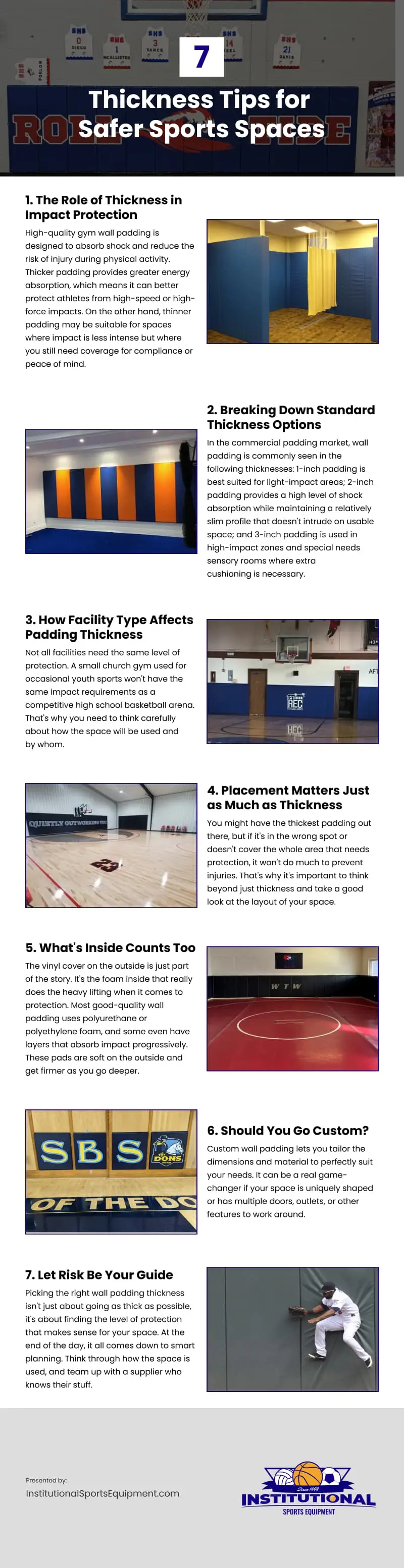
When choosing wall padding for a gym, school, church, or recreation center, thickness is crucial for safety, not just looks. Check out this infographic for seven thickness tips for safer sports spaces.