
Flashback to fifth grade, and you’re backed up against your elementary school gymnasium wall pads, desperately trying to avoid flying dodgeballs. At 10 years old, you didn’t stop to ask yourself why the padding was there amidst the chaos. To be fair, you were busy carrying your elementary team to victory.
But now, maybe you are outfitting a new gym or upgrading an older facility and asking yourself why you need wall padding. And no, it’s not solely to brightly display your school’s colors or follow regulations.
In this article, you will learn the why behind wall padding and how to make safer and smarter decisions for your gymnasium.
Why Wall Padding Matters
Safety
At its core, wall padding exists to reduce injury from accidental or high-impact contact. In any environment where physical activity happens, like schools, gymnasiums, fitness centers, and childcare facilities, there’s always a risk of someone slipping or tripping into a wall or corner. That moment of impact can lead to serious injury if the surface isn’t designed to absorb shock.
Wall padding provides a layer of cushioning that softens these impacts. Hardwood floors, tile, concrete, and brick surfaces are unforgiving during collisions. If a child falls during a game of basketball or a student in an adaptive learning program accidentally bumps into a wall, the padding can prevent bruises, cuts, or more severe trauma.
By proactively reducing these risks, you’re not only protecting your students or facility users, but you’re also reducing your organization’s potential liability and creating a culture of care.
Code Compliance
The National Federation of State High School Associations (NFHS) has guidelines recommending wall padding in areas where players are likely to make contact with walls or obstacles during gameplay. For example, basketball courts must have a minimum of six feet of unobstructed space between them and the end line. If a wall is closer than that, you’ll need padding to mitigate risk.
In special education classrooms or sensory rooms, padding is often part of broader compliance with ADA (Americans with Disabilities Act) guidelines or school district safety codes. Authorities might not require you to pad every wall, but understanding the risk level in different zones can help you make informed decisions that keep everyone safe. This is especially important in high-traffic or high-impact areas.
If you’re unsure what codes apply in your area, work with a sports equipment expert to evaluate your facility and identify the smartest places to add padding based on both regulations and usage.
Acoustic Control and Noise Reduction
While safety is the primary purpose of wall padding, there’s a second but often overlooked role: noise control. In large gymnasiums, echo and reverb can be overwhelming. Even in smaller rooms, like daycare centers or multi-use classrooms, sound can bounce off hard surfaces and create an overstimulating environment, especially for children with sensory processing challenges.
Wall padding, especially when made with acoustic-grade materials, helps absorb sound waves. That means you get a quieter, more manageable space that enhances focus, reduces distractions, and promotes a better learning or training environment.
If you’ve ever been in a gym where it feels like the sound of one bouncing ball turns into a full-on echo chamber, you’ll appreciate how padded walls can create a calmer atmosphere.
Inclusion and Special Needs Safety
Certain conditions, like autism, cerebral palsy, or behavioral disorders, may make students more likely to fall, lose their balance, or accidentally harm themselves through sudden movement. This makes wall padding for sensory rooms a must for facilities that accommodate children with special needs.
Wall padding in these settings breeds inclusion. It allows students to participate in daily activities without constant risk or restriction. For example, if you’re outfitting a sensory room, padded walls and corners help create a safe environment for movement, play, or therapy.
Aesthetic Design
Wall padding can also play a role in aesthetic design. Many facilities choose custom colors or logo-branded padding to match their school spirit or reinforce their brand identity. While safety always comes first, integrating wall padding into your facility’s visual design shows attention to detail and pride in your space.
When done right, padding doesn’t feel like an afterthought. It enhances the environment. It signals to parents, athletes, and students that you’ve thought through every element of safety, functionality, and design.
Materials and Construction: What’s Inside Counts
Not all wall padding is the same. You’ll find a wide range of materials, thicknesses, and construction styles, and choosing the right one depends on how you use your space. Padding is typically made from foam cores covered in heavy-duty vinyl. The foam absorbs impact, while the vinyl exterior protects the material from wear, moisture, and tearing.
Standard thickness ranges from one to two inches, with denser cores recommended in areas of high-impact play. Some pads mount directly to the wall using furring strips or Z-clips, while others may be removable or semi-permanent for flexible spaces.
You don’t need to become an expert on foam densities or mounting systems, but understanding the basic components helps you make sure you’re getting quality protection and not just something that looks good on the wall.
Choosing the Right Wall Padding Suppliers
You may feel overwhelmed by the task of finding the right wall padding supplier or worried about wasting your school’s limited funds on a product that doesn’t even work. I’ve been there too, so let me help you. Look for a provider that listens to your goals and recommends products that work, not just what’s trending or on sale.
I can help you assess your facility, source high-quality wall padding that meets your budget, and ensure you’re checking every box when it comes to performance, safety, and compliance.
Conclusion
Wall padding is the secret hero of gymnasiums everywhere. It keeps students, athletes, and facility users safe while creating an inclusive space. From injury prevention and acoustic control to compliance and visual design, padding plays a behind-the-scenes role that supports everything your facility stands for.
By understanding its purpose and how it fits into your broader safety and design goals, you make better decisions that help your community, one padded wall at a time.
Video

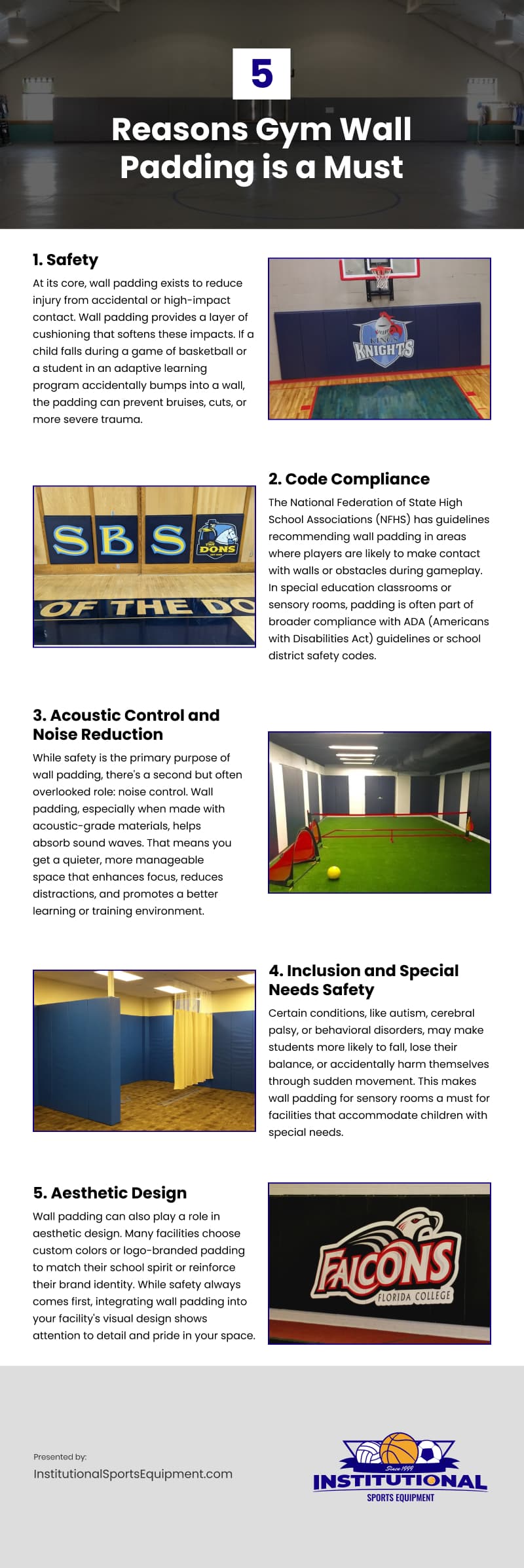
Infographic
Wall padding plays a vital role in creating a safe, functional, and visually unified gym or learning space. This infographic highlights five key reasons why it’s a must-have feature.